Fight or Flight
Catalogue essay by Anna Krien to accompany Tai Snaith's exhibition

The irukandji jellyfish, found in the northeast waters of Australia, is tinier than the head of a matchstick. It is almost impossible to see, but its effects on the human nervous system are as horrifying as say, a great white shark were circling. Likened to a bad LSD trip, scientists say the unknowing victims of the irukandji experience not only searing pain but also an overwhelming sense of fear and doom.

Victims have been known to sprint down the beach screaming as if death itself were chasing them, their exertion rushing the poison to their heart and killing them. A lifesaver stung by the irukandji was found in the public toilet block with his arms wrapped around the toilet and bawling – ambulance officers had to pry him away from the toilet bowl.

Most fear is believed to stem from an experience – as least that is how the Freudian psychoanalytical movement viewed irrational fears, that they are a result of something repressed – be it a memory or a desire. But does this fear, a chemical release triggered by the irukandji jellyfish, create the same experience for every one of us? Or is everyone’s experience of impending doom different?

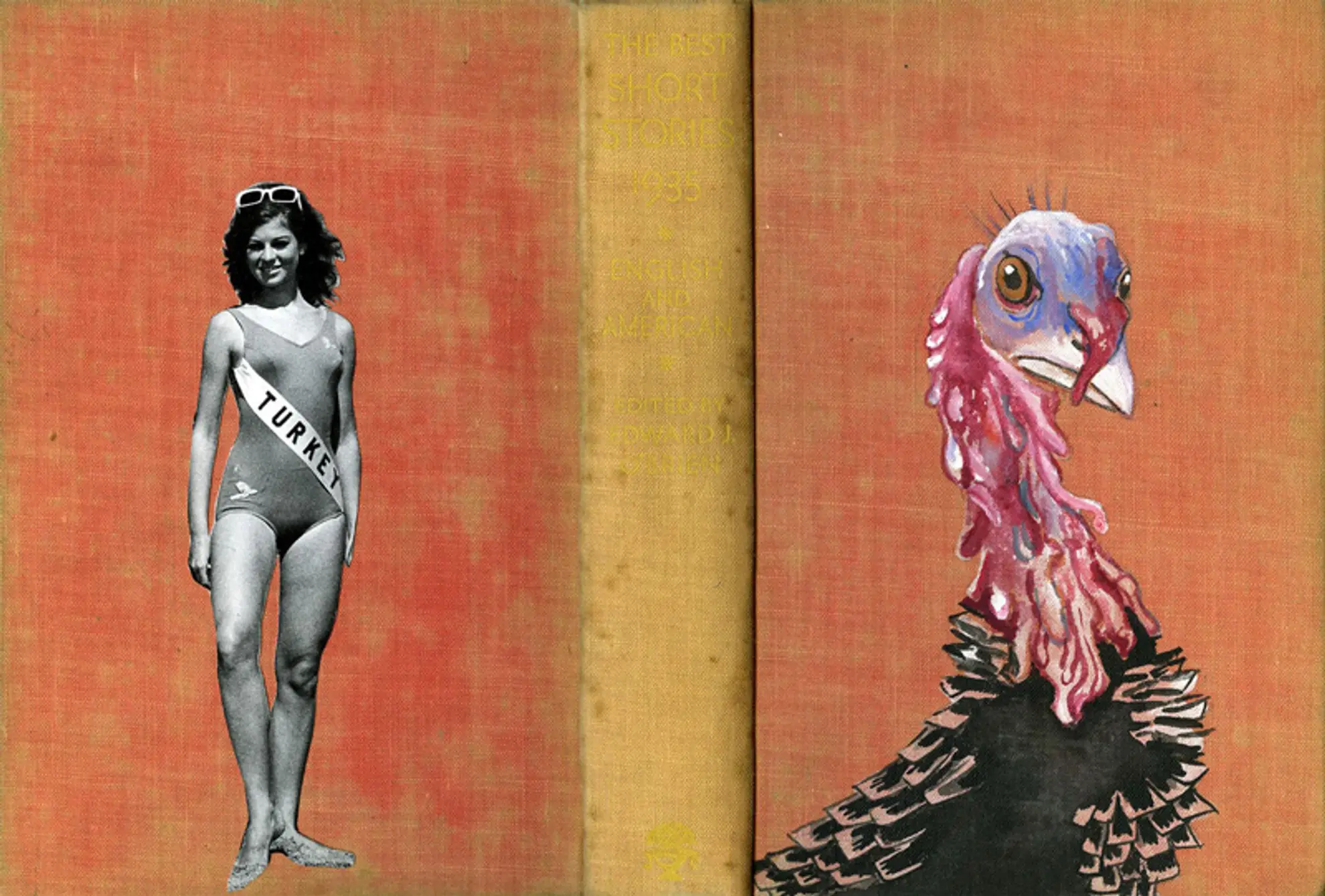
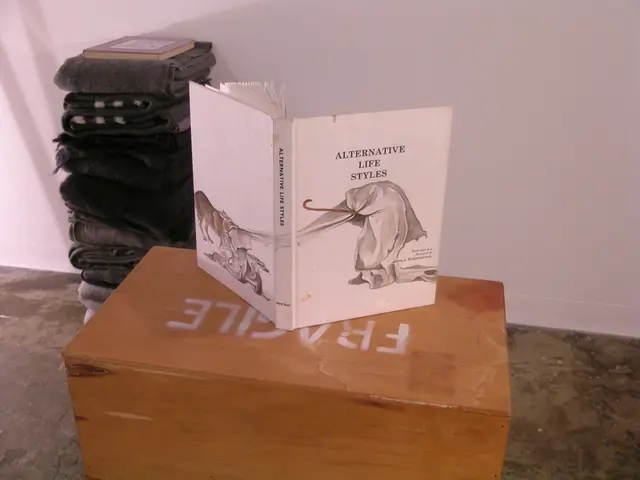
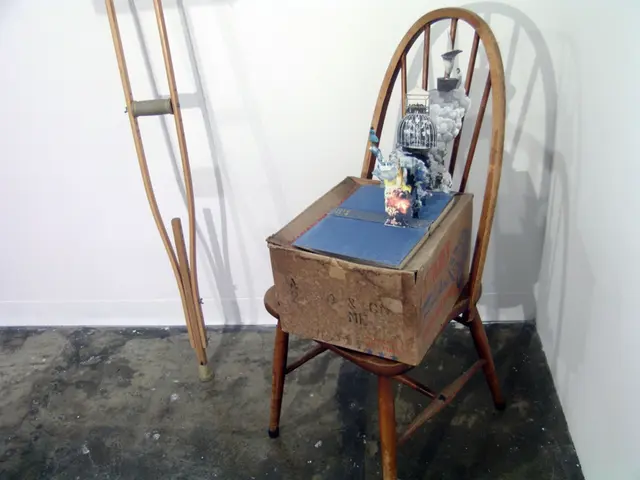
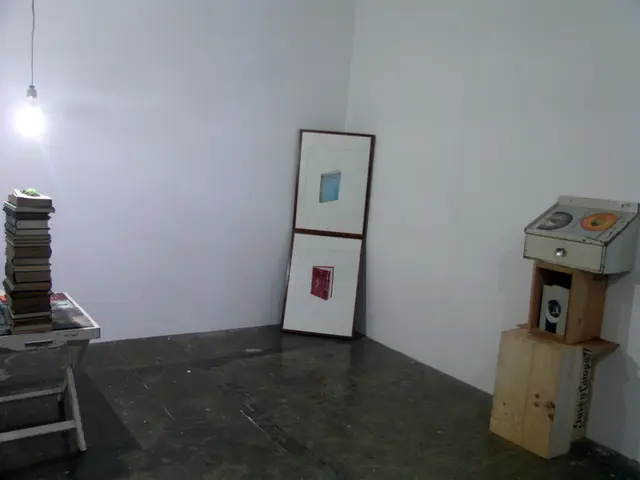
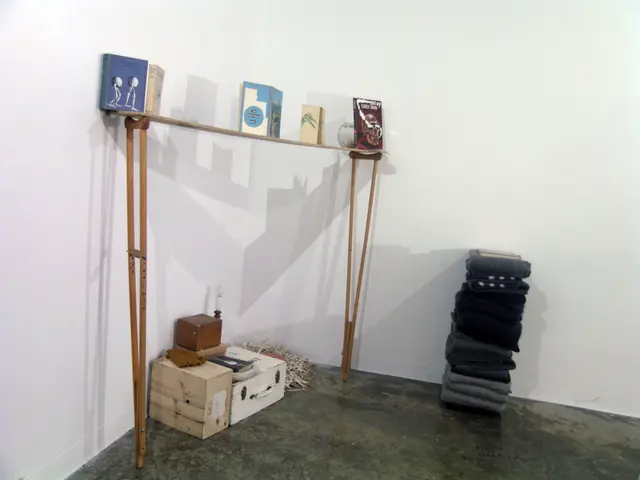
Fight or Flight is a series of new works on paper and vintage book covers by artist Tai Snaith. Combining collage and drawing in a makeshift bomb shelter, these detailed works explore ideas of survival, animal instinct and a sense of impending doom. She considers the possibility of harboring old books as if it this dugout shelter were a study retreat for the mind to mess with the intelligentsia of an old and doomed world. And yet, despite the finality of most ‘end of world’ scenarios, there is a comic sense of play and the absurd as Snaith’s mind seems to wander, as one’s would inside a bomb shelter when the novelty of impending doom wears off. Like a child will infuriate their parents by scribbling over the faces of politicians in today’s newspaper (turning the prime minister into a drag queen or drawing boobs on a footballer, if I remember correctly), Snaith boldly etches her own vision onto the old and reinvents the past whilst waiting for the doom to unlock the latch to her hidey-hole.

The term ‘Fight or Flight’ has become a somewhat commonplace and flippant piece of information amongst humans. What was once a seminal theory is referred to repeatedly, often without a true understanding of Walter Cannon’s discovery or the adaptations he later made to his thesis. We know ‘fight or flight’ is the response in an animal’s brain when faced with a threat, but what we seem to forget is that when faced with danger, we neither fight or runaway – rather, like chameleons, many of us try to disappear. You may have experienced this on the train or tram, when a man, psyched and leering for a fight, scans the carriage trying to catch someone’s eyes. Those of us who are keen on self-preservation will studiously avoid meeting his eyes. We will try not to stand out.

Charles Darwin once wrote that “fear is the most depressing of all emotions” as he discussed scared animals literally depressing themselves by flattening their ears and crouching close to the ground. Yet, while some animals in the wild react this way to conserve energy – not wanting to ‘fight or flight’ without necessity, humans stay still mostly out of social restraint. The recent bushfires in Victoria this year is an example of just how dulled our primal instincts have become. Journalists wrote of how people in the direct line of fire on Black Saturday were paralysed by complacency. Tourists took photos of the black furls of smoke coming toward them before returning poolside and drinks were poured at a wedding banquet even as staff outside threw buckets of water onto the reception centre.

And while many of us ignore these very real threats of fire and climate change, there is a constant increase of social phobias in the Western world – people experiencing survival responses on a crowded tram or in a supermarket queue. Panicking like birds trapped inside a house – we bang ourselves against the windows of our very own society. For us, it seems there are other influences beyond experience and instinct involved in fear. We have the unfortunate gift of anticipation and imagination. We dread things that might happen. Things that are less likely to happen to us such as snakebite or drink spiking or a plane crash than say an ordinary car accident or a fatal melanoma. But because we have read about it, seen it on TV or been told about it, we can’t help but dread it.

It is strange how little we contemplate the remnants of animal instinct we retain under our own skins, we tend to either dress up this intuition as human intelligence or disguise it with medical technology. In fact some of us seem so intent on disconnecting ourselves to these primal instincts that doctors will conduct surgery - such as clipping a small segment of involuntary nerves - to stop surges of intense blushing. Unique to humans, blushing is a response from part of our nervous system that prepares the body for action in a fight or flight situation. But the question remains – why do our bodies undermine us? Red-faced, we inform others that we may be feeling vulnerable, lying or deceiving ourselves – often despite our wishes to do so. Perhaps our bodies - our so-called human intelligence - are trying to tell us that there is more than simply to fight or flight?

Which returns us to Tai Snaith’s apocalyptic shelter. For while the den is an icon of doom, there is a sense of resilience in Snaith’s accompanying artwork. Her creations refuse to be spooked. She is unable to fully retreat from the world, regardless of whether it still exists or has been turned into a wasteland. Rather she seeks to recreate the world by decorating this underground den with signs of life.

At the beginning of this century, American psychologist Shelley Taylor introduced an alternative response model to danger. Not disproving ‘Fight or Flight’ response, Taylor suggested that it was not the only response available to us. She called it the Tend and Befriend response, wherein animals (including humans) managed threats and stressful encounters by seeking social support and tending to their offspring. Often the females of the species and in particular, among primates whose offspring are typically helpless, can neither attack a predator for fear of being wounded and unable to care for their offspring, and nor can they run away without leaving their offspring behind. Instead they tend to their offspring and befriend a community in which they can be protected by the sheer volume of numbers.

There is a sense of Tend and Befriend in Tai Snaith’s shelter. To begin with, she has invited us inside it. And while many us may think bomb shelters belong in the future, we are wrong. There are thousands of individuals already inside their secret hidey-holes, people bunkering down for the apocalypse. Army disposal shops are inundated with people getting ready for the end of the world. But the difference between this shelter we find ourselves in and the many others dug out in suburban backyards, ancient cities and abandoned old towns, is that it hasn’t really given up. Rather – instead of destruction and stasis, the resident of this den seems hell-bent on creation.

 
< Prev   Next >

Future Program